Aboubakar Wane Islamic Psychology & Neuropsychology Practice

Book an appointment
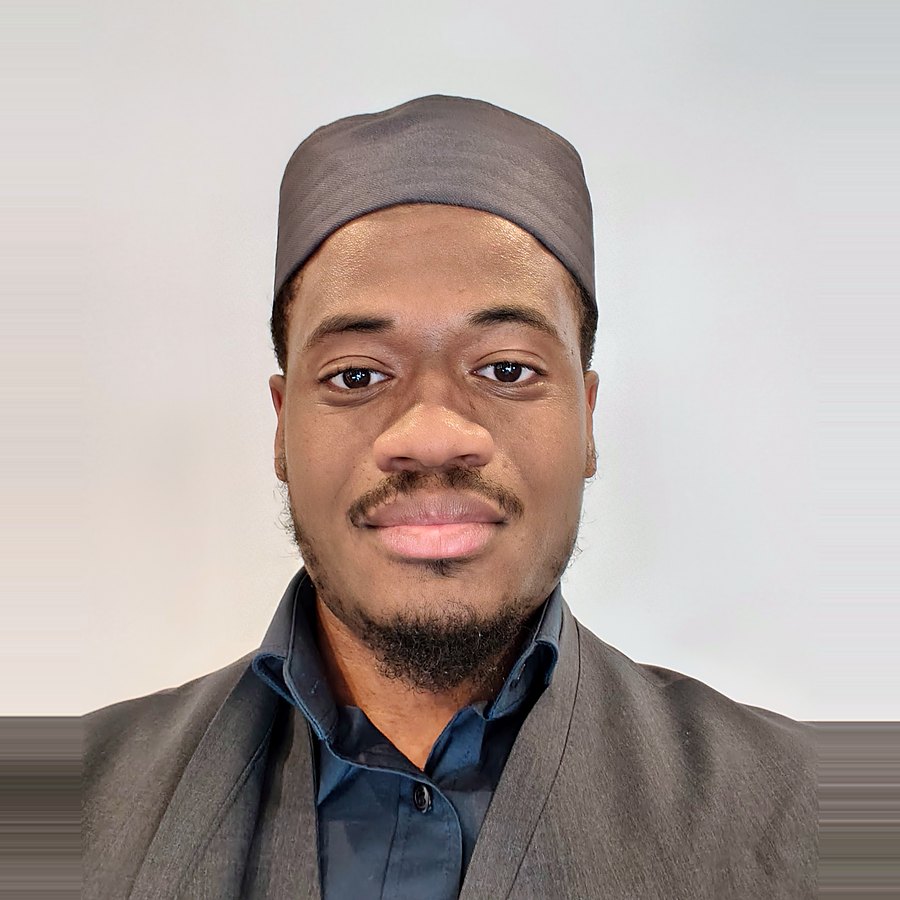
Portrait of Aboubakar Wane
About me

Aboubakar Wane

  • Clinical psychologist
  • Psychotherapist
  • Neuropsychologist

I hold a master’s degree in clinical psychology and neuropsychology from Université Paris Descartes, and went on to earn a certificate in Islamic psychology with Dr Ali Habbibi, followed by training in Islamically integrated psychotherapy at the Khalil Center. Alongside my practice, I study the Qur’an and the religious sciences.

In Islamic psychology, I work online with men, teenagers and married couples who wish to be supported by a Muslim psychologist. Convinced that true well-being cannot be reached by setting spirituality aside, I see my role as that of a khalil, a close friend: someone who shares your values and does their best to help you, within a rigorous and balanced framework, relying on Allah.

In neuropsychology, I carry out home assessments in the Paris region (Île-de-France) for attention deficit disorder with or without hyperactivity (ADHD), autism and intellectual quotient (IQ) at any age, as well as memory assessments for older adults and after a stroke or a head injury. The aim: to understand precisely what is going on and to offer suitable solutions.

Languages of consultation: French, English

Psychology training

  • Master’s degree in clinical psychology and neuropsychologyUniversité Paris Descartes
  • Certificate in Islamic psychologyDr Ali Habbibi
  • Islamically integrated psychotherapy (TIIP training, level 2 in progress)Khalil Center, Dr Hooman Keshavarzi and Dr Fahad Khan

Islamic sciences

  • Student of the religious sciencesInstitut Din ul Qayyima
  • Student at the Mahdara NabaghiyyahMahdara Nabaghiyyah (English programme)
Who I see

Who I work with

In therapy, online, I work with men, teenagers and married couples. For assessments, at home, I see people of all ages. The most frequent concerns:

  • Depression
  • Anxiety
  • Obsessions and waswas
  • Addictions

Men

  • Depression, anxiety, stress, burnout
  • Obsessive-compulsive disorder and waswas (intrusive thoughts with a religious theme)
  • Addictions
  • Grief and life’s trials
  • Self-assertion

Teenagers

  • Anxiety, low mood, stress
  • School, family or relationship difficulties
  • Waswas and intrusive thoughts

Married couples

  • Broken communication
  • Crisis or recurring conflict
  • Preparing for a new stage

Assessments, all ages

  • Attention, restlessness, impulsivity
  • Questions about autism
  • Giftedness, learning difficulties, school orientation
  • Memory in older adults
  • After a stroke or a head injury
Islamic psychology

What is Islamic psychology?

Islamic psychology is a discipline rooted in Islam. It offers an understanding of the human being and a therapeutic framework drawn from Islamic sources, the words of scholars and the work of contemporary academics.

A universal reach

More than 85% of human beings identify with a religion. Yet today’s major Western models do not truly take spirituality into account as a therapeutic resource, even though they were built almost exclusively on Western, secularised populations. In the Islamic view, every human being has a fitra, their original nature, and one Lord, whether they acknowledge Him or not. So it is not merely a matter of taking a cultural difference into account: Islamic psychology offers a universal foundation.

A holistic approach

It takes into account the cognitive, spiritual, emotional and behavioural aspects of the person. It fully integrates research-based techniques as therapeutic tools: cognitive behavioural therapy (CBT), dialectical behaviour therapy (DBT) and emotion-focused therapy (EFT).

Well-being, without making it an absolute goal

It helps patients feel better, without treating that well-being as an absolute goal to be reached by any means. It starts from the principle that well-being, in its Islamic sense, cannot be reached by setting spirituality aside.

The psychologist as a khalil

The psychologist’s role is inspired by that of the khalil, the intimate friend. The psychologist is neither a secular specialist nor a murabbi, a spiritual guide. He stays in his rightful place: a close friend who shares the values of his brother or sister and tries to help as best he can, within a rigorous and well-defined framework, relying fully on Allah.

A balanced framework

It moves away from the detached, supposedly “neutral” stance often advocated in mainstream psychology. The framework cannot be impersonal, because it is the meeting of two brothers or two sisters: a balanced framework, genuine and at the right distance.

Neuropsychology

The neuropsychological assessment

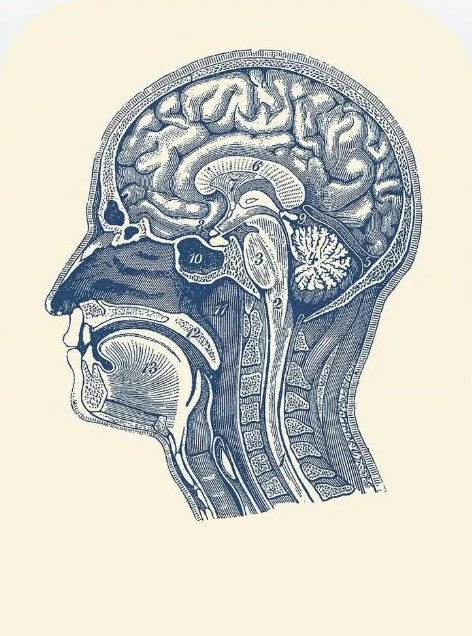
The assessment evaluates how thinking works: attention, memory, language, reasoning, organisation. It helps to understand where a difficulty comes from and to suggest practical solutions at home, at school or at work.

I carry out assessments of attention deficit disorder (ADHD), autism (ASD) and intellectual quotient (IQ) at any age, as well as memory assessments for older adults and after a stroke or a head injury. Assessments take place at home, in the Paris region (Île-de-France), at weekends.

An assessment is useful, for example, when a child struggles at school despite their efforts, when an adult wonders whether they have an attention disorder, when parents have questions about autism, or when an older person is worried about their memory.

After the assessment

At the end of the assessment, I give you a written report with practical recommendations for home, school or work. In the future, follow-up sessions in cognitive remediation, that is, regular exercises to strengthen weaker functions, may also be offered.
How an assessment works

  1. First interview

    We go over your history, the difficulties you face and what you expect.

  2. Tests

    Standardised exercises, over one or several sessions, adapted to age and needs.

  3. Analysis

    I interpret the results and write a detailed report.

  4. Feedback

    I explain the results, give you the report and together we decide on the next steps.

Info & fees

Therapy and assessments

Therapy

Reduced rate

First session

€60individual therapy

A first appointment to get to know each other, understand your request and decide together on the next steps.

Individual therapy

€75per session

A 50-minute session to work on what weighs on you: anxiety, depression, waswas, grief, addictions…

Up to 20% off

Session packs

from €60per individual therapy session

4, 8 or 12 individual therapy sessions, paid in one go.

See the packs
  • 4 sessions€270€67.50 per session · 10% off
  • 8 sessions€520€65 per session · 13% off
  • 12 sessions€720€60 per session · 20% off

You book the first session online, then we schedule the rest together.

Couples therapy

€150per session

A 90-minute session for married couples: rebuild communication, get through a crisis or prepare for a new stage.

Let’s get to know each other. Book a free 15-minute discovery call to talk through your needs and see together how I can help.

Book a discovery call

Assessments

Each assessment includes a first interview, the tests, a written report and a feedback session.

ADHD assessment

€450per assessment

Assessment of attention deficit disorder, with or without hyperactivity.

Autism assessment (ASD)

€450per assessment

Assessment of autism spectrum disorder.

ADHD + autism assessment

€700per assessment

Combined assessment of attention and the autism spectrum, when both questions arise.

IQ assessment

€250per assessment

Measurement of the intellectual quotient: giftedness, learning difficulties, school orientation.

Memory or cognitive assessment

€450per assessment

Assessment of memory, or of cognitive functions after a stroke or a head injury.

Good to know

  • Therapy online only. Assessments at home in the Paris region (Île-de-France), at weekends.
  • All payments are made by bank transfer.
  • Therapy: each session must be paid no later than 48 hours before the appointment, otherwise it is cancelled.
  • Assessments: the full amount must be paid before the appointment, with no payment in instalments.
  • A session cancelled less than 48 hours before the appointment is not refunded.
Blog

Articles & talks

After the Trappes attack: what residents told me

A few days after the Islamophobic and racist attack in Trappes and La Verrière, I held a listening service at the La Verrière mosque. On the Repat Africa podcast, I talk about residents’ fear, their sense of abandonment and what everyone can do to support them.

Listen to the podcast (in French)

ADHD or not? Why diagnosis needs several perspectives

Anxiety, giftedness, trauma: many difficulties look like ADHD. I explain how to reach an accurate diagnosis.

Watch the talk

Stress and anxiety in students: understanding and taking action

Exam pressure, procrastination, racing thoughts: understanding anxiety and finding practical psychological and spiritual tools.

Watch the talk (in French)

Talks and workshops

Mosques, associations, schools: I speak about mental health and faith, parenting and attention disorders.

Invite me to speak
How it works

How to book a session

Therapy, online

Wherever you are, from home. All you need is an internet connection and a quiet place where you can speak freely.

Assessments, at home in the Paris region

I come to your home at weekends, during my visits to the Paris region (Île-de-France), to carry out the assessment. Contact me to find out the next dates.

Book an appointment

Booking is done online, on the Perfactive platform (in French).

Contact me

To book, use the “Book an appointment” button. For any question, leave me a message.

Patient reviews (translated from French)

Frequently asked questions

Do you answer religious questions?

No. A clinical psychologist is not qualified to issue a fatwa. At most, he can give general guidance on certain topics and refer you to a qualified person.

Do I need to be practising to book a session?

No, sessions are open to everyone, whether you are at the beginning of your journey or already well along it.

Can I be seen in person at a practice?

No, Islamic psychology sessions take place exclusively online. Neuropsychological assessments, on the other hand, take place at home, in the Paris region (Île-de-France), at weekends.

How do I pay?

Payment is made exclusively by bank transfer. The details are on Perfactive.

Are sessions reimbursed?

Some health insurers reimburse sessions, but it varies case by case.

Does what I say remain confidential?

Yes, the psychologist is bound by professional confidentiality.

Do you practise roqya?

No, roqya is not practised here.

What happens in the first session?

We get to know each other, you tell me what brings you and I ask you some questions. At the end, we set up a framework for follow-up. In individual therapy, the first session is offered at a reduced rate.

What is the difference between a therapy session and an assessment?

A therapy session is a space to talk about what you are going through and move forward. A neuropsychological assessment is a precise evaluation of attention, memory or learning, with tests and a written report.